



From emerging designers and industry mentors to artificial intelligence innovators and community builders, the 13 recipients of TUXA Awards 2026 represent the growing diversity of Nigeria’s design and technology ecosystem.
A new generation of Nigerian designers is helping redefine what it means to build a career in the creative
and technology industries.
Some are developing digital products. Others are building communities, mentoring emerging professionals, creating educational content or exploring how artificial intelligence can transform the way technology serves people.
Their contributions may take different forms, but they share a common connection: the growing influence of design in shaping businesses, careers and technological innovation.
At the 2026 edition of The UX Design Awards, known as TUXA, 13 individuals, communities and organisations were recognised for contributions across these areas.
Founded by Nigerian product designer Olawale Bamidele, TUXA seeks to celebrate the people and organisations advancing design excellence while providing a platform for professional recognition.
The 2026 recipients reflect an industry that is expanding beyond traditional perceptions of design as the creation of attractive screens and visual identities.
Their recognition highlights a broader ecosystem in which creativity, leadership, technology and community development are increasingly connected.
The Designers Building the Next Chapter
For many emerging professionals, building a career in design begins with developing practical skills, finding opportunities and demonstrating the ability to solve problems. Recognition can become an important milestone in that journey.
Razaq Momodu, named Emerging Designer of the Year, represents the category of rising professionals whose development is important to the future of Nigeria’s design workforce.
The award places attention on emerging talent and the importance of creating pathways for newer
practitioners to gain visibility.
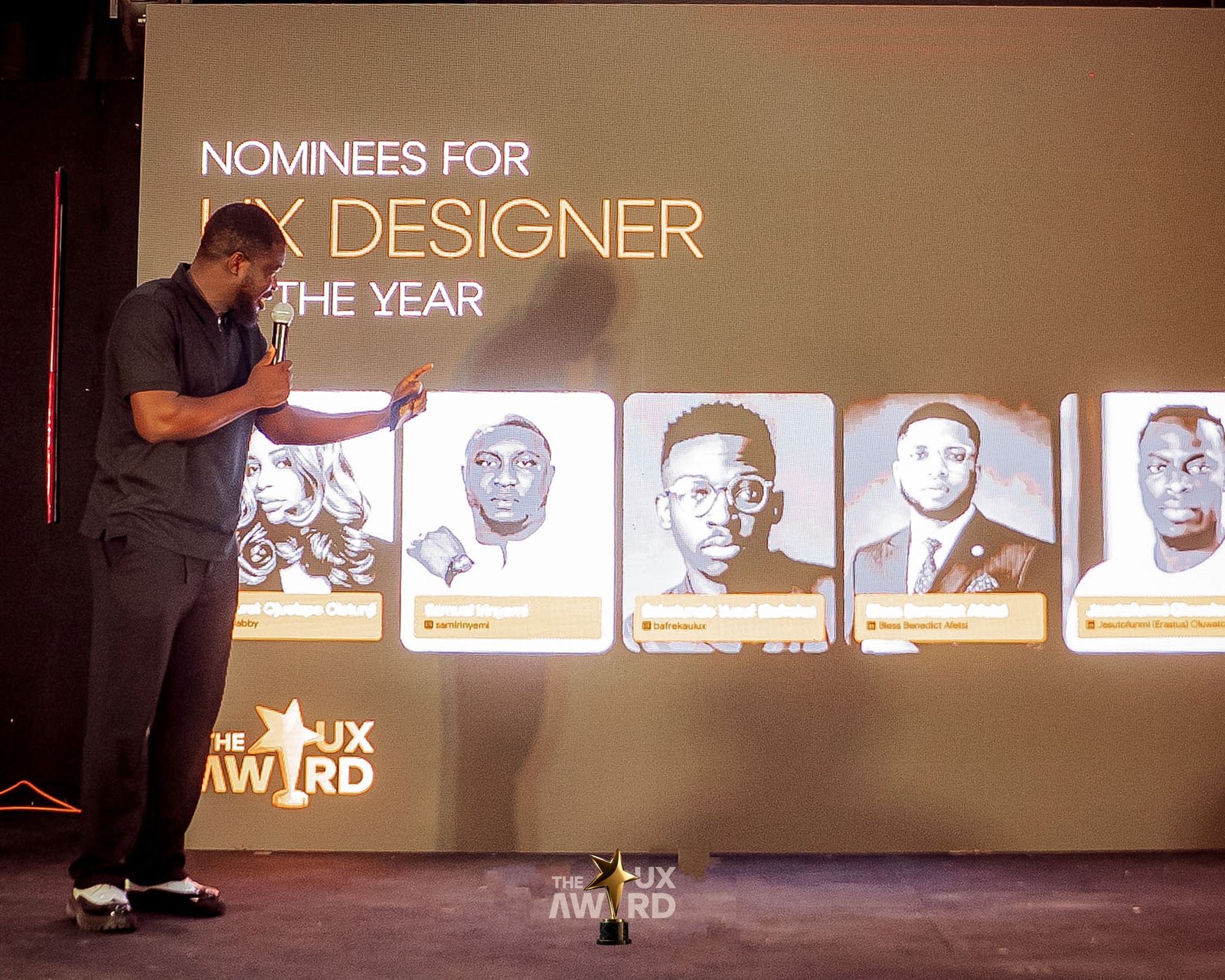
Babatunde Yusuf, popularly known as Bafreka, received the UX Designer of the Year award.
His recognition reflects the importance TUXA places on professional achievement within user experience design, a discipline that helps organisations understand customers and develop more effective digital services.
Oladosu Ibrahim Adekunle received the UX Design Creative of the Year award, recognising creative contributions within the user experience field.
Gabriella Echebiri was honoured in the Made in Nigeria; Product Designer of the Year category, placing a spotlight on Nigerian talent within the product design profession.
Together, these four recipients represent different dimensions of design excellence, from emerging talent and creative practice to professional recognition within product development.
Their awards also reflect the growing opportunities available to Nigerian designers as digital services become more important across industries.
The People Helping Other Designers Grow
Behind many successful professionals are individuals who share knowledge, offer guidance and create opportunities for others.
These contributions are not always visible in finished products, but they can influence the development of an entire professional community.
Folashade Adegbite, recipient of the Design Mentor of the Year award, was recognised in a category dedicated to the importance of professional guidance.
Mentorship can help emerging designers understand career expectations, strengthen their portfolios and make more informed decisions about their professional development.
Rukayat Yaro received the Design Thought Leader of the Year award, a category that celebrates the role of ideas, industry conversations and knowledge sharing in shaping professional practice.
As design continues to evolve alongside artificial intelligence and emerging technologies, professionals who contribute to public understanding and industry discussions can help others navigate change.
Abolarinwa Timothy, recognised as Design Content Creator of the Year, represents another important part of the ecosystem.
Educational and professional content can make design knowledge more accessible, particularly for people developing their skills outside traditional learning environments.
These awards acknowledge that the growth of an industry depends not only on those producing outstanding work but also on those helping others learn how to produce it.
Don’t Miss This:
Africa’s young innovators are harnessing emerging technology to build solutions that matter
The Communities Creating Opportunities
Nigeria’s design industry has benefited from the development of professional communities that connect people across locations, experience levels and areas of specialisation.
These networks can provide spaces for learning, collaboration, mentorship and access to career opportunities.
Tech Tribe received the Design Community of the Year award, recognising the importance of organised professional networks within the industry.
Cynthia Ezinne Ohaeri was named Tech Community Impact Leader of the Year, highlighting leadership within the wider technology community.
Abayomi Semudara received the Tech Supporter of the Year award, acknowledging contributions that support the development and progress of others within the technology ecosystem.
Their recognition reflects a broader understanding of professional success.
While individual achievement remains important, the strength of an industry also depends on the environments that allow new talent to emerge.
Communities help create these environments by bringing people together, encouraging knowledge sharing and supporting collaboration.
For professionals who may not have immediate access to established industry networks, such communities can provide valuable connections and opportunities.
Women Led Innovation, Artificial Intelligence and Social Impact
Three of the 2026 awards recognised organisations working at the intersection of technology, innovation and broader industry development.
Forma Design Studio received the Women-Led Tech Innovation Award. The category draws attention to the role of women led organisations in advancing technology and creative innovation.
As the technology industry continues to expand, recognising diverse leadership can help broaden visibility and encourage participation across the sector.
Pewbeam received the AI-Driven Design Innovation Award, reflecting the increasing importance of artificial intelligence in creative and product development processes.
AI is changing how professionals research ideas, develop prototypes, explore design alternatives and
build digital products.
Its growing influence also raises questions about how designers can maintain human judgement, creativity and responsibility while using increasingly capable tools.
Japa Flex received the Tech For Good Award, a category that recognises the potential for technology to address meaningful challenges.
The award reflects the wider importance of developing digital solutions that serve people and contribute to positive outcomes.
Together, these organisations represent different approaches to innovation, from inclusive leadership and emerging technology to socially relevant digital products.
Why Recognition Matters for African Talent
Nigeria has become an important source of creative and technology talent, with professionals contributing to digital products, businesses and communities across different markets.
However, professional achievement does not always receive recognition beyond immediate networks or
organisations.
Awards platforms can help make these contributions more visible.
They can introduce emerging talent to wider audiences, acknowledge experienced practitioners and encourage younger professionals to see design as a field with multiple career possibilities.
The range of categories at TUXA Awards 2026 is particularly significant.
Rather than focusing exclusively on individual design output, the awards also recognise mentorship, content creation, community development, artificial intelligence and social impact.
This approach reflects the interconnected nature of modern design industries.
A successful digital economy requires not only people who can create products but also those who can teach, organise, support and develop new ideas.
Olawale Bamidele’s Vision for TUXA
For founder Olawale Bamidele, TUXA is part of a broader ambition to strengthen professional recognition for designers and technology innovators.
The platform’s development vision begins with Nigeria, with plans to pursue wider African recognition by 2027 and a global presence by 2030.
These are future ambitions rather than established milestones, but they indicate the direction in which the initiative hopes to grow.
Expanding an awards platform across markets would create opportunities to highlight professionals whose work contributes to different parts of Africa’s digital and creative economies.
It would also require credible recognition processes, meaningful industry participation and a commitment to celebrating achievement across diverse professional backgrounds.
For Bamidele, the opportunity lies in building a platform that gives greater visibility to design professionals while encouraging continued excellence within the industry.
Thirteen Winners, Different Paths, One Growing Industry
The recipients of TUXA Awards 2026 do not all work in the same discipline, and their achievements cannot be measured by a single definition of success.
Some are recognised for design practice. Others are celebrated for mentorship, leadership, community development, innovation or the application of technology to meaningful challenges.
That diversity is part of what makes the awards significant.
It reflects an industry in which professional contributions increasingly extend beyond individual projects to include the development of people, organisations and communities.
For Razaq Momodu, Folashade Adegbite, Oladosu Ibrahim Adekunle, Abolarinwa Timothy, Babatunde Yusuf, Gabriella Echebiri, Rukayat Yaro, Tech Tribe, Forma Design Studio,
Abayomi Semudara, Cynthia Ezinne Ohaeri, Pewbeam and Japa Flex, the 2026 awards mark a moment of professional recognition.
For Nigeria’s wider creative and technology community, they offer a picture of the different people and organisations helping shape the industry’s future.
And for the next generation of African designers, they reinforce an important message: there is more than one way to make a meaningful contribution to design.
ABOUT TUXA The UX Design Awards (TUXA) is a recognition platform celebrating excellence in design, creative leadership, technological innovation and community impact. Its long term ambition is to expand from Nigeria into a wider African and international platform.
Don’t Miss This:
Oladimeji Davies Warns Against Costly Mistakes in Property Investment