


Developing reliable food processing capacity requires more than investing in machinery. The availability of raw materials, relationships with farmers, storage infrastructure and access to markets can determine how effectively an agricultural business operates. These interconnected challenges have shaped Emeka Emehelu’s approach to building Express All Agro.
An agribusiness entrepreneur with a background in manufacturing, brand development and chemical engineering, Emehelu identified an opportunity within Nigeria’s agricultural sector to bridge the gaps between food production, processing and distribution.
Having studied Chemical Engineering at Kwame Nkrumah University of Science and Technology (KNUST) in Ghana, Emehelu brings a systems-oriented approach to agribusiness, with an emphasis on operational efficiency, product quality and process optimisation.
Through Express All Agro, he is developing an integrated agricultural business connecting farmers, processors, distributors and consumers. The company’s operations include a rice processing facility in Idu Industrial Area, Abuja, with an installed capacity of 60 tonnes per day, alongside outgrower relationships spanning Bauchi, Kano, Taraba and Adamawa States.
His approach recognises that expanding rice processing capacity must be accompanied by improvements in paddy sourcing, drying infrastructure, storage and distribution. Express All Agro’s wider business activities also incorporate technology-enabled agro-shopping, connecting traditional agricultural operations with digital purchasing opportunities.
Beyond building a commercially sustainable enterprise, Emehelu advocates addressing structural inefficiencies that contribute to rising food costs in Nigeria. He believes that improving coordination across the agricultural value chain can help create more dependable routes to market for farmers while improving consumers’ access to quality food.
In this exclusive interview with Crest Africa, Emeka Emehelu discusses his transition into agribusiness, the development of Express All Agro, the operational realities of rice processing in Nigeria and his long-term vision for building a more connected and competitive agricultural sector.

From Manufacturing and Brand Development to Agribusiness
Crest Africa: Your professional journey began in manufacturing and brand development before you ventured into agriculture. What inspired that transition, and what opportunities did you identify in Nigeria’s agricultural sector that convinced you to build Express All Agro?
Emeka Emehelu: My interest in manufacturing and branding gave me an appreciation for how products are developed, presented and brought to market. When I turned to agriculture, I saw a sector with enormous potential but a long and often fragmented journey between production and the consumer. Nigeria has a large food market, yet farmers, processors and buyers can struggle to connect efficiently. I saw an opportunity to build a business that could work across that chain and contribute to making agricultural products more accessible.
Applying Chemical Engineering to Agricultural Processing
Crest Africa: You studied Chemical Engineering at Kwame Nkrumah University of Science and Technology in Ghana. How has your engineering background influenced your approach to agricultural processing, product quality and operational efficiency?
Emeka Emehelu: Engineering encourages you to understand how a system works, identify where it can improve and pay attention to consistency. I bring that mindset to processing: looking at the steps involved, how quality is maintained and where operational improvements can make a difference. In rice milling, product quality is not just about the final appearance; it depends on managing the process carefully from raw material through to finished product. My education has given me a useful foundation for asking those questions and approaching challenges methodically.
Building an Integrated Agribusiness Through Express All Agro
Crest Africa: Through Express All Agro, you are developing an agribusiness that connects agricultural production, rice processing and distribution. What inspired this integrated business model, and how does bringing these activities together address gaps in Nigeria’s food supply chain?
Emeka Emehelu: The model comes from seeing how closely these activities depend on one another. Production needs a dependable route to processors, and processors need reliable supplies and access to buyers. Distribution then determines whether the finished product reaches customers consistently. When these links are disconnected, the whole chain can become less predictable and more costly. By participating in production, processing and distribution, we aim to coordinate those stages more effectively and build a business that responds to real market needs.
Developing a 60-Tonne-Per-Day Rice Processing Facility in Abuja
Crest Africa: Express All Agro operates a 60-tonnes-per-day rice processing facility in Idu Industrial Area, Abuja. What have been the biggest operational challenges in running the facility, and what lessons have you learned about developing reliable rice processing capacity in Nigeria?
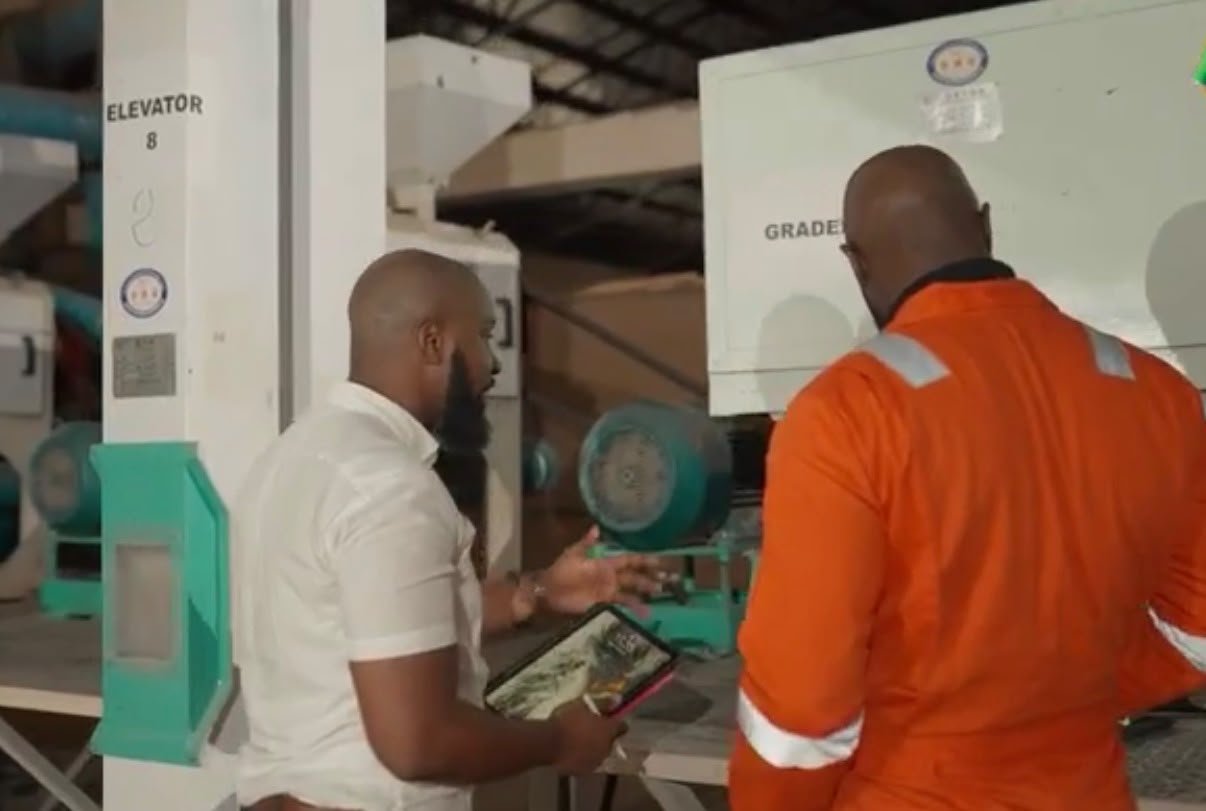
Emeka Emehelu: One of the biggest lessons is that processing capacity depends on more than the mill itself. You need a steady supply of suitable paddy, reliable equipment, skilled people and effective systems for drying, storage and distribution. These elements have to work together. Operating a facility has reinforced the importance of planning across the full cycle—from sourcing raw material to getting finished rice to customers. The details of capacity and current output should be understood in context: installed capacity is not the same as actual daily production.
Strengthening Farmer Partnerships Across Four Nigerian States
Crest Africa: Express All Agro works with a growing network of outgrowers across Bauchi, Kano, Taraba and Adamawa States. How do these partnerships support your rice processing operations, and what opportunities do you see for strengthening relationships between farmers and processors?
Emeka Emehelu: Outgrower relationships can help create a closer connection between farmers and processors. They can give processors better visibility of future supply, while farmers may benefit from a clearer route to market and a stronger understanding of the quality and timing requirements of buyers. The opportunity is to develop partnerships that are reliable and beneficial on both sides. That means communication, fair commercial arrangements and practical support that helps farmers produce paddy that meets processing needs. We are focused on developing these relationships as part of building a dependable supply chain.
Investing in Drying Infrastructure and Rice Processing Efficiency
Crest Africa: You have invested in improving drying capacity and optimising rice processing operations. What production challenges prompted these investments, and how are they influencing efficiency, product consistency and overall output?
Emeka Emehelu: Drying is a critical stage in rice processing. If paddy does not reach the right condition before milling, it can affect processing performance and the consistency of the finished product. Improving drying capacity helps us manage this stage more effectively and support a smoother flow through the facility. The broader aim is to reduce bottlenecks, improve consistency and make better use of processing capacity. We are continuing to assess the results through operational performance and product quality.
Addressing Food Inflation and Supply Chain Inefficiencies in Nigeria
Crest Africa: You have argued that Nigeria’s food inflation is driven by inefficiencies in the food supply system, not simply by scarcity. What are the most significant inefficiencies you have identified, and what practical changes would make food production and distribution more affordable?
Emeka Emehelu: Scarcity is part of the picture, but it is not the only factor. The way food moves through the system matters too. Fragmented supply chains, limited storage and processing capacity, high transport costs and weak connections between producers and buyers can all add cost or reduce the amount of food that reaches the market in good condition. Practical improvements would include investment in storage and processing, better transport and logistics, stronger access to finance and technology, and more direct, dependable relationships between farmers, processors and buyers.
Connecting Agricultural Distribution and Technology-Enabled Agro-Shopping
Crest Africa: Express All Agro’s operations extend from rice processing in Abuja to supplying markets across Nigeria, while the wider business also incorporates technology-enabled agro-shopping and agricultural products. How are you connecting these different activities to make food products more accessible to customers?
Emeka Emehelu: We see these activities as connected parts of a broader effort to improve access to agricultural products. Processing creates finished products; distribution helps move them to customers; and digital tools can make it easier for people to find and purchase products. Our online agro-shopping and agricultural-product activities support that wider aim. The challenge is to ensure that technology is backed by reliable supply, clear product information and fulfilment that works in practice. We want to keep building those links as the business grows.
Investment, Infrastructure and Policy Priorities for Nigeria’s Rice Industry
Crest Africa: Nigeria’s rice industry continues to face challenges involving financing, paddy availability, production costs and market access. From your experience operating within the sector, what forms of investment, infrastructure and policy support would make the greatest difference to local rice processors?
Emeka Emehelu: Processors need access to suitable long-term finance for equipment, energy, storage and working capital. Investment in drying, warehousing, transport links and reliable power would also help businesses manage costs and maintain quality. On the supply side, stronger farmer–processor partnerships and practical support for production could improve paddy availability. Policy can make a difference by creating a predictable operating environment and supporting infrastructure across the value chain. The most effective support is coordinated: investment in a mill alone cannot resolve challenges in farming, logistics or access to markets.

Emeka Emehelu’s Long-Term Vision for Express All Agro and Nigeria’s Food Security
Crest Africa: From manufacturing and brand development to rice processing, agricultural partnerships and nationwide distribution, your journey has centred on building connected systems. What is your long-term vision for Express All Agro, and how would you like its growth to contribute to Nigeria’s food security and agricultural competitiveness?
Emeka Emehelu: My long-term vision is to build Express All Agro into a strong, trusted agricultural business that connects more of the journey from production to the customer. That means developing our processing capacity, strengthening relationships with farmers, improving distribution and making agricultural products easier to access. I would like the company’s growth to create more dependable routes to market for producers and more consistent access to quality food for consumers. Ultimately, our contribution should be practical: building a business that can grow while supporting a more productive and competitive Nigerian agricultural sector.