



South Africa’s ruling African National Congress (ANC) recorded approximately 32% of votes counted in the country’s November 4, 2026 municipal elections, raising the possibility of its weakest local election performance since the end of apartheid in 1994. The early results placed the ANC narrowly ahead of the Democratic Alliance (DA), which had secured about 27%, as political parties prepared for coalition negotiations in major cities.
According to Reuters on November 5, the South Africa ANC Vote Share stood at approximately 32% with 36% of votes counted by 1200 GMT. The figures indicated a substantial decline from the ANC’s 2021 municipal election performance, although the final outcome remained uncertain because most ballots had not been counted.
The South Africa Municipal Elections 2026 have attracted attention because of growing public dissatisfaction with local government services, including water supply, electricity, crime and corruption. The results could also change the political balance in Johannesburg and other municipalities where no party is expected to secure an outright majority.
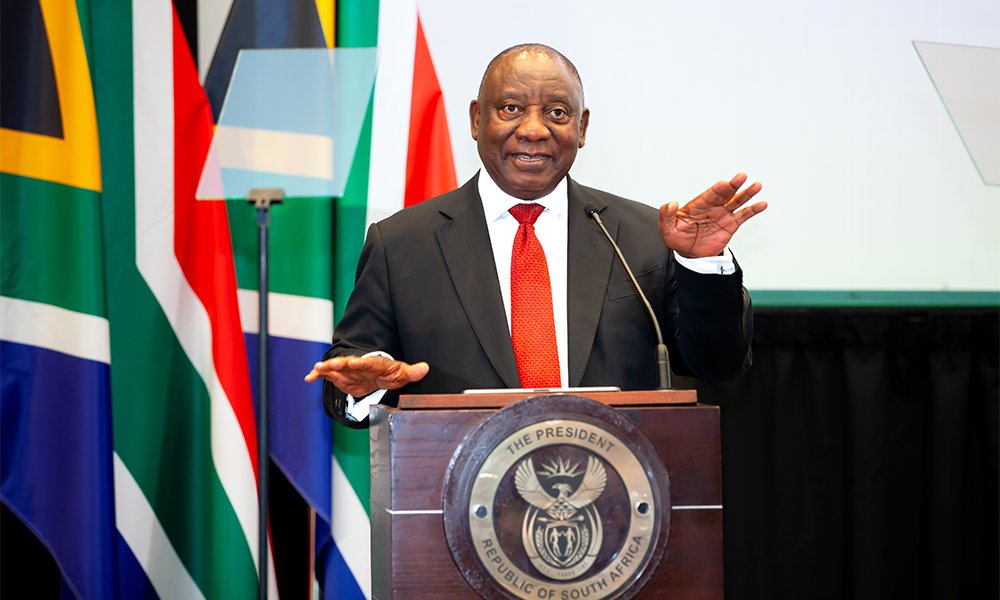
President Cyril Ramaphosa’s ANC has remained South Africa’s largest political party since the country’s first democratic elections in 1994. However, its declining electoral support has created a more competitive environment in which opposition parties are seeking greater influence over municipal administration.
South Africa ANC Vote Share Drops to 32% in Early Results
The South Africa ANC Vote Share stood at approximately 32% in the early count, compared with 27% for the Democratic Alliance.
These figures were released by South Africa’s electoral commission after 36% of votes had been counted.
The ANC’s early performance suggested a decline of approximately 14 percentage points from its result in the 2021 municipal elections, when it recorded its weakest local election showing at the time.
However, the comparison remains provisional because the 2026 figures represent only a partial count.
Results from outstanding municipalities and voting districts could still change the national vote shares.
The ANC has historically performed differently in municipal and national elections, meaning that the early local results cannot be treated as a direct forecast of the 2029 national election.
Nevertheless, the initial figures indicate that the party faces a difficult electoral environment.
The ANC’s political dominance has been closely associated with its role in ending apartheid and establishing democratic government in South Africa.
Since 1994, it has remained central to the country’s political system, although support has declined as competition from opposition parties has expanded.
The latest municipal results represent another test of the party’s ability to retain voter confidence, particularly in areas where residents have expressed dissatisfaction with local government performance.
South Africa Municipal Elections 2026 Highlight Voter Concerns Over Services
The South Africa Municipal Elections 2026 took place against a background of public complaints about municipal administration and access to basic services.
Reuters reported that high crime rates, corruption scandals and problems with water and electricity supply were among the issues influencing voter dissatisfaction.
Municipal governments are responsible for important services that directly affect households and businesses.
These responsibilities include aspects of local infrastructure, sanitation, water distribution and other essential functions.
When service delivery deteriorates, residents may experience interruptions to daily activities and additional financial costs.
Local government performance can therefore become an important factor in municipal voting decisions.
The ANC has previously acknowledged shortcomings in local governance, according to Reuters.
However, the early results do not establish the precise reasons behind every voter’s decision.
Different communities may have voted based on local candidates, service delivery, party preferences or other concerns.
The reported decline in ANC support should therefore be understood within the wider political and administrative conditions surrounding the election.
Democratic Alliance Gains Ground as ANC Faces Stronger Competition
The Democratic Alliance emerged as the ANC’s closest competitor in the early national count, securing approximately 27% of votes counted.
The DA was also performing strongly in several major cities, according to Reuters.
Its early results suggested that it could gain influence in municipalities where the ANC had previously exercised substantial political control.
The party has expressed ambitions to expand its national support ahead of the next general election in 2029.
However, municipal election results do not determine the composition of the national parliament.
They also do not establish which party will lead the country after the next national election.
The immediate significance of the DA’s performance lies in its potential influence over municipal councils and coalition negotiations.
In cities where no party wins an outright majority, the DA could seek agreements with other parties to participate in local government.
The terms of any such agreements would depend on negotiations after the final results are declared.
The early figures therefore indicate stronger competition but do not establish the final distribution of municipal power.
South Africa ANC Vote Share Could Mark Historic Electoral Decline
The South Africa ANC Vote Share recorded in the early count raised the possibility of a historically weak municipal election result for the party.
Reuters reported that an eventual result of approximately 32% would represent a decline of about 14 percentage points from 2021.
South Africa’s Council for Scientific and Industrial Research (CSIR) also projected that the ANC could finish with a vote share close to the figure recorded in the early count.
The CSIR projection provided an additional assessment of the possible outcome, although it remained a forecast while counting continued.
The research organisation also projected voter turnout of approximately 52%.
That would represent an increase compared with the 2021 municipal elections.
A higher turnout combined with reduced support for the ANC could indicate that voters were participating while choosing other political parties.
Louw Nel, a senior political analyst at Oxford Economics Africa, offered that interpretation in comments reported by Reuters.
Nel suggested that ANC supporters who might previously have abstained could instead have participated and voted for alternatives.
He described a potential final result of 32% as the party’s worst electoral scenario.
However, the interpretation remains an analyst’s assessment rather than a confirmed explanation of individual voting behaviour.
Final results and more detailed electoral data would be needed to establish the full pattern of voter participation.
Don’t Miss This:
South Africa AGOA Suspension Threatens Thousands of Jobs as US Trade Benefits End in January 2027
Cyril Ramaphosa’s ANC Faces Pressure in Major Municipalities
President Cyril Ramaphosa voted during the November 4 municipal elections at Hyde Park High School in Johannesburg.
The election took place as his party sought to defend its position in several important municipalities.
The ANC’s early performance indicated that its local political influence could weaken if the provisional results were maintained.
However, the party’s national leadership and its position in the country’s coalition government are separate from the municipal election results.
The outcome of local elections determines representation in municipal councils and influences the formation of local administrations.
It does not automatically change the presidency or dissolve the national government.
The ANC’s national chairperson, Gwede Mantashe, urged caution in interpreting the early count.
Mantashe told journalists that results from important areas, including townships, had not been fully counted.
He expressed optimism that the party’s position could improve as additional votes were included.
His comments highlighted the uncertainty surrounding the partial figures.
With a majority of votes still outstanding at the time of the Reuters report, the final national distribution remained unresolved.
Johannesburg Election Results Point to Coalition Negotiations
Johannesburg emerged as one of the most closely watched municipalities in the South Africa Municipal Elections 2026.
Early results showed the Democratic Alliance leading in the city, although only 17% of votes had been counted.
The limited count meant that the result was too close to determine.
Johannesburg is South Africa’s largest city and an important commercial centre, making control of its municipal government politically significant.
The DA’s mayoral candidate, Helen Zille, expressed optimism about her party’s performance while acknowledging that counting was still at an early stage.
A DA victory in Johannesburg would represent a significant political development, but the early lead did not establish that the party had secured control.
Several parties were competing for representation in the city.
ActionSA, founded by former Johannesburg mayor Herman Mashaba, was also performing strongly in the early count.
Its eventual number of council seats could influence negotiations if neither the ANC nor the DA obtains an outright majority.
The final balance of representation will determine which parties can form a governing coalition.
Any assessment of Johannesburg’s next administration must therefore remain provisional until the results are declared and coalition arrangements are concluded.
Democratic Alliance Records Strong Early Cape Town Result
The Democratic Alliance also recorded a strong performance in Cape Town.
According to official data cited by Reuters, the party had secured approximately 60% of votes counted in the city at the time of reporting.
The DA declared an early victory, consistent with expectations that it would retain substantial support in Cape Town.
However, the 60% figure was based on votes counted at that stage and was not presented as the final certified result.
The party’s performance in Cape Town contrasted with the more competitive situation in Johannesburg.
While Cape Town appeared favourable to the DA in the early count, Johannesburg remained uncertain.
This distinction demonstrates how municipal election outcomes can differ significantly across South Africa.
National vote shares provide an overall picture of party support, but local councils are determined by results within individual municipalities.
The distribution of votes across wards and proportional representation systems can also influence council composition.
Consequently, a party’s national percentage does not automatically determine the number of municipalities it will control.
KwaZulu-Natal Results Show Growing Competition Among Parties
The ANC also faced competition in KwaZulu-Natal, where opposition parties were performing strongly in the early results.
According to Reuters, former President Jacob Zuma’s uMkhonto weSizwe party and the Inkatha Freedom Party were both ahead of the ANC in parts of the province.
The development indicated that the ANC’s difficulties extended to areas where several parties were competing for political influence.
KwaZulu-Natal has become an important area of competition involving the ANC, the DA, uMkhonto weSizwe and the Inkatha Freedom Party.
However, the Reuters report did not provide complete provincial vote shares or final municipal results for these parties.
The early figures therefore establish that competition was strong but do not determine the eventual composition of councils across the province.
The outcome will depend on the remaining vote count and the distribution of support within individual municipalities.
South Africa Municipal Elections 2026 Set Up Coalition Talks
The South Africa Municipal Elections 2026 are expected to produce coalition negotiations in several major cities.
Where no party obtains enough council seats to govern independently, parties must reach agreements to establish municipal administrations.
Reuters reported that political parties would have two weeks from the declaration of results, expected on Sunday, to form local governments.
The negotiations could involve the ANC, DA, ActionSA and other parties, depending on the results in each municipality.
Coalition arrangements may determine the election of mayors, the allocation of executive responsibilities and the policy priorities of municipal administrations.
However, the composition of each coalition will depend on the number of seats secured by participating parties.
Analysts cited by Reuters suggested that an ANC-DA arrangement could be one possible approach in Johannesburg, similar to their cooperation within South Africa’s national government.
The two parties nevertheless have significant policy differences, including disagreements over racial redress.
Such differences could complicate negotiations over local government priorities.
Other parties could also become important coalition partners where their seats are necessary to secure a governing majority.
ActionSA’s performance in Johannesburg is relevant in this context because it could influence the balance between larger parties.
No final coalition agreement had been reported at the time of the Reuters article.
South Africa ANC Vote Share Raises Questions Ahead of 2029 Elections
The decline suggested by the South Africa ANC Vote Share has drawn attention to the longer-term direction of the country’s political competition.
The ANC has been South Africa’s largest party since 1994, but its electoral support has faced sustained pressure.
A weaker municipal result could influence internal party discussions, opposition strategies and preparations for the next national election.
However, the 2029 election remains a separate political event.
Municipal voting patterns do not provide a definitive measure of future national support.
The DA has expressed ambitions to become South Africa’s largest party, but the early municipal count does not establish that it will achieve that objective.
The immediate consequences of the November 2026 election will be determined at municipal level.
These include the allocation of council seats, the formation of coalitions and the selection of local administrations.
The final election results will provide a clearer assessment of how party support has changed since 2021.
Until then, the reported 32% ANC vote share remains an early indication of a potentially substantial electoral decline.
What This Means For Africa
The South Africa Municipal Elections 2026 illustrate the changing nature of political competition in one of Africa’s largest economies.
The ANC’s early vote share of approximately 32% suggests that the party could face a significant reduction in local electoral support if the trend continues through the final count.
The development is notable because the ANC has played a central role in South African politics since the country’s democratic transition in 1994.
Stronger competition from the Democratic Alliance, ActionSA, uMkhonto weSizwe and the Inkatha Freedom Party indicates a more fragmented municipal political environment.
However, the results remained incomplete at the time of reporting, and the final allocation of political power had not been determined.
The South Africa ANC Vote Share also demonstrates the importance of distinguishing between local and national elections.
Municipal results influence local governance and service delivery, while national elections determine representation in parliament and the formation of the national government.
The possible increase in voter turnout to approximately 52%, as projected by the CSIR, is another development of interest.
If confirmed, it would indicate greater participation than in the previous municipal election.
However, higher turnout alone does not establish the reasons behind voters’ choices.
For other African democracies, the election highlights the importance of local governance, public services and coalition negotiations in determining political outcomes.
Municipal administrations influence essential services that affect everyday economic and social activity.
The ability of parties to form functioning coalitions can therefore have consequences for service delivery and local policy implementation.
As of November 5, 2026, the ANC had approximately 32% of votes counted nationally, compared with 27% for the DA, while counting continued.
The final results, expected on Sunday, will establish the electoral outcome and provide the basis for coalition negotiations across major municipalities.
Don’t Miss This:
Image Credit: sbmintel.com