


Some journeys don’t start with a perfect plan, they start with courage, curiosity, and the refusal to let opportunity slip away. Samuel Oghenejaboh, widely known as Sammyflow, embodies this truth in its purest form.
Long before the titles, the platforms, or the global stages, Samuel was simply someone who paid attention to opportunities others might overlook.
What began as a young music instructor refusing to let a door close quietly evolved into a deeper discovery: a natural instinct for building, structuring, and scaling ideas beyond himself.
His journey cuts across music, media, technology, and enterprise development, but at its core is a relentless commitment to growth. With little capital but a sharp willingness to learn, Samuel leaned into skills, self-education, and experimentation, often figuring things out alone when mentorship wasn’t readily available.
That process shaped not just the companies he would later build, but the leader he continues to become.
Today, through ventures like Wiflow Group, platforms like MyMuute, and thought leadership through speaking engagements and The GigBanter Podcast, Samuel represents a new kind of African builder, one who understands that creativity is not just expression, but infrastructure, not just talent, but a tool for economic transformation.
His story speaks to pressure, pivots, and the courage to outgrow old dreams in pursuit of bigger responsibility. It reflects a belief that Africa’s future will be shaped by those willing to build platforms, nurture people, and think long-term, even when the work is hard and the results take time.
In this interview, Samuel shares the moments that shaped his path, the lessons learned while building in fast-moving creative industries, and the mission driving his vision to help Africa move from consumption to production through the power of creativity and technology.
CA: Samuel Oghenejaboh, your journey as a creative entrepreneur, business strategist, and venture builder is truly inspiring. Can you take us back to how it all began?
Samuel: I started my 1st company at 19yrs and it was simply me trying to not let an opportunity go to waste. Apparently, I used to teach music at a school and I had a boss who was the contractor. After about a year of working with him, I took on a higher paying role with another music training company.
A few months later, I got a call from the owner of the previous school I worked at saying they needed me to come take over as they love my work.
I already had a job but didn’t want to lose this opportunity, so I had to set it up as a business where I hired other teachers to work for me and that was how I discovered I had a thing for entrepreneurship even though I didn’t know what it was at the time.
CA: Interesting! Carving out a path across media, technology, and enterprise development takes grit and vision. What was your journey like, and were there any key mentors or role models who guided you along the way?
Samuel: Starting Wiflow, I wanted to build a big business, that I knew already but I needed capital to do that and since I didn’t have it, I had to think of the easiest thing I could do to make money without needing financial capital and it was my skills in marketing and a little media.
At the time I knew almost nothing about building a great company but that is one thing I had to prioritize as I grew every single day. I watched a lot of entrepreneur movies, read some books, took courses on entrepreneurship, startup bootcamp, finance, legal and a lot more and those were my mentors.
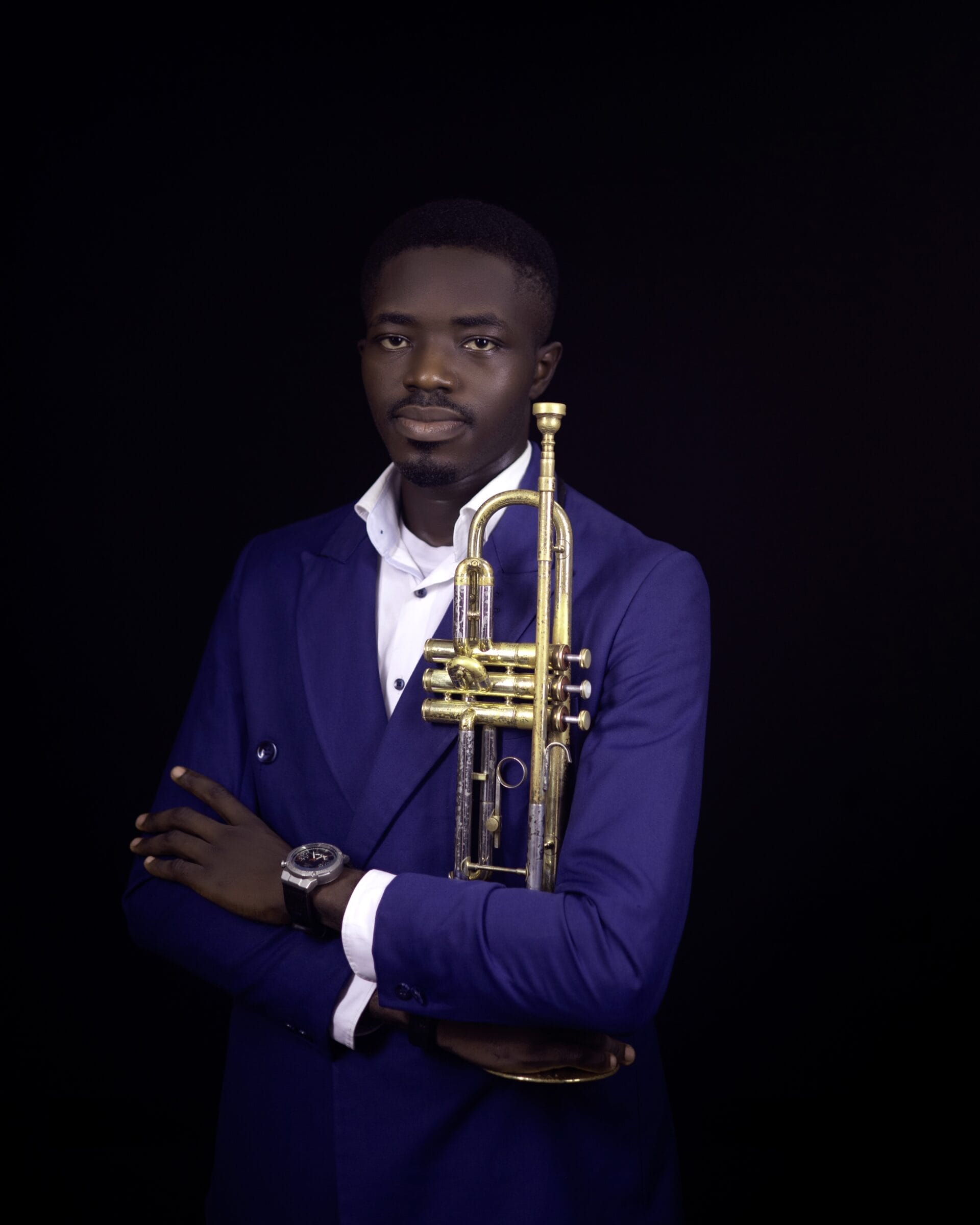
I remember reaching out to some successful business men who knew me in my church because I already made a name for myself as a famous trumpeter. I asked and begged for mentorship but all I got was a “no problem, message me” without actions to back it, so I just kept going on my own and figuring it all out myself.
CA: That level of self-learning and resilience is powerful. The worlds of creative business and innovation are fast-paced and constantly evolving. What challenges did you face while building platforms like Wiflow Group and MyMuute, and how did you push through them?
Samuel: It is true that these sectors are constantly evolving and the biggest challenge we face is the talent problem.
If I were operating as a solo-preneur, I’d evolve fast, learn things fast and grow fast but I can’t go far alone and that’s why I have a business and have built systems that can enable us scale easily but our biggest challenge then comes with the talent.
I’ve had to make hires in the past of alleged professionals that I still have to train and teach them their job.
I got tired of doing that and had to start hiring interns instead, training them through a period and then putting them on salaries and that takes a lot of time to do.
Another challenge is that we are a creative company and it can be so limiting when we hire creatives to work like robots, so what we had to start doing is prioritize the creatives to be the centre of our business, make it easy for them to create, make them love what they do, make them see a future working with us, make them want to carry the brand’s vision without asking and occasionally I’ve had creatives reach out to me, thanking me for creating a safe place for them to thrive.
I believe what has helped us until date is listening to what the business is telling us without literally hearing anything, because when we listen, we see what can be better and we quickly take action on it.
CA: Wow, this is powerful. Your career has been built on consistency, bold execution, and persistence. What kept you motivated, especially during the tough early days before progress became visible?
Samuel: Literally, my initial dream was to be the world’s best trumpeter and I was on the trajectory to achieving that already having won up to 2 ‘Best Trumpeter’ Awards.
It was not until later that I realized that the probability of me achieving that dream was less than 1% due to the challenges that exist in this part of the world and I had to change my dream to become a billionaire instead and I think that has been my motivation since then.
I also understand that becoming a billionaire comes at its cost and if I’ll achieve what others cannot achieve, then I’ve gotta do what others have not done and it isn’t going to be easy so that keeps me going every single day even until now.
CA: That shift is huge. From event production to media storytelling and music-tech innovation, your background is remarkably diverse. How has your experience shaped the way you handle challenges in entrepreneurship and platform strategy today?
Samuel: I love to see myself as an outlier… What I do easily, some people would have to burst their brain to do it but it has come from a place of deep learning and evolving all the time.
I believe God has planted in us the capacity to do more than we are doing, it is only left to us to unlock that potential and for me, I keep unlocking new potentials every single season of my life. I’ve literally become notorious for doing hard things and making it work.
I have multiple track records to back it. Some people said to me the past few weeks of this festive season “You work quite well under pressure” and it made me analyze myself again and I realized it was true but it wasn’t always like this… In the past, I would’ve entered a shell whenever I saw pressure coming a distance away but these days, I see it as an opportunity to grow and it has never proven me wrong.
So challenges are only part of the fun for me, I embrace them and figure out ways through it every single time.
CA: Love that. You’ve inspired many within Africa’s creative and entrepreneurial ecosystem through your ventures, public speaking, and “The GigBanter Podcast.” How does it feel knowing your journey and mentorship are helping guide the next generation of creators and builders?
Samuel: For me, I believe there’s still a lot more to do but whenever young people approach me to express their gratitude listening to my podcast or getting advice from me and even requesting career counseling, I always love to do more for them because I believe when our younger generation know better, they would do better so we need more of them to know better.
I always tell parents, “the best gift you can ever give your child in this life is exposure”. Expose them to information, inspire them to think and dream big, show them that there’s unlimited opportunities and no limit to how far they can go and how much they can be.
CA: That sense of responsibility really stands out. You’ve grown a strong voice online and on global stages including TEDx and the African Union Private Sector Forum. What inspired you to share your knowledge and lived experience with others?
Samuel: What is the purpose of having those opportunities if we cannot use them to pass on the legacy of our knowledge and experience? What I know remains mine until I’m given a platform to amplify it to more people, then it becomes what they know too.
These platforms exist to amplify knowledge, experience, and perspectives, and whenever I have the opportunity to do that, I make sure to use it to its fullest capacity, because the destiny of the world might depend on that little knowledge I have.
CA: Looking ahead, what’s next for you in your career? Any exciting projects or milestones on the horizon?
Samuel: At Wiflow, we’re currently organizing initiatives that will transform Africa from consumption to producers, utilizing the creative sector as a tool for this transformation.
It will be very difficult and will take a lot of time to hatch but we will not stop until we do it at scale. For us, Wiflow isn’t just a business, it is a mission.
CA: That is really exciting. As someone deeply embedded in the creative-tech business space, what’s one common misconception about entrepreneurship or digital platforms that you’d like to correct?
Samuel: Platforms are infrastructure that every economy across all sectors needs in order to evolve, and whoever can build the biggest platform can make the most money.
This is one key fact many African entrepreneurs get wrong. There are still platforms yet to be built, while they may not make you money directly at first, they can grow into ecosystems that generate cash flow and, ultimately, significant wealth.
Entrepreneurship, on the other hand, is not an easy escape from adulthood. It is a much harder path, and being a business owner does not necessarily make you an entrepreneur.
CA: Finally, to wrap this up, if you could give just one piece of advice to anyone dreaming of making an impact within Africa’s creative economy, what would it be?
Samuel: My popular quote “You can be all you want to be, irrespective of how much you need to be”


