


True transformation often begins with a single question, why can’t things be better? For Moses Abah, that question sparked a journey into one of Africa’s most demanding and impactful fields, infrastructure development and investment advisory.
Where many see complexity, Moses sees possibility and the drive to unlock capital, connect global investors with local ambition, and turn bold ideas into real impact.
From advising on small projects to founding Hilvard Holdings Ltd, Moses has become a trusted bridge between governments, institutions, investors, and communities across Africa.
His work spans critical infrastructure that shapes daily life and requires uncommon expertise to deliver. With every deal structured and partnership formed, he continues to move development from paper to reality.
Moses’ story is defined by humility and grounded leadership. Despite global recognition including the 2025 Global Entrepreneurship Award in Accra, Ghana, he remains deeply focused on purpose.
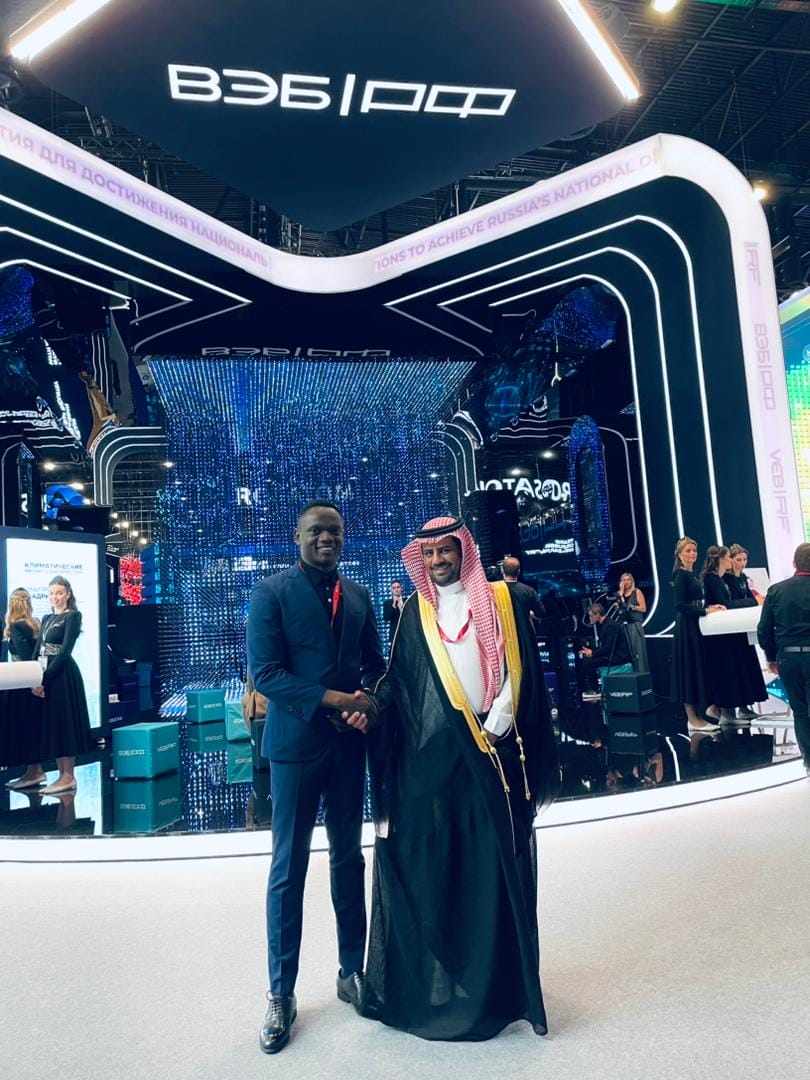
He is driven not by titles or applause, but by the belief that when the right capital meets the right structure, Africa can compete on a global scale.
In this interview, we explore Moses Abah’s remarkable journey shaping the future of African infrastructure development.
CA: Moses, your work sits at the intersection of finance, infrastructure development, and global investment. Can you take us back to how it all began and what inspired you to pursue this path and build Hilvard Holdings Ltd?
Moses: From the beginning, I was drawn to big problems, electricity gaps, logistics inefficiencies, underfunded public assets and the question of why Africa wasn’t unlocking the capital it needed to solve them.
My work started with advising on small projects, but very quickly I realised the continent needed a platform that could structure, mobilise, and deploy capital at scale.
That vision became Hilvard Holdings Ltd: a firm built to bridge global investment with African infrastructure, and to help countries move from ambition to bankable execution.
CA: That gives such strong insight into your foundation. Building a career in infrastructure development and investment advisory requires vision and resilience. What was your journey like, and were there any key mentors or role models who guided you along the way?
Moses: My journey has been a mix of resilience, curiosity, and relentless learning. Infrastructure isn’t glamorous at the start, it’s technical, bureaucratic, and slow.
But I had mentors who sharpened my thinking: senior bankers who taught me discipline, public-sector leaders who showed me the value of policy, and global investors who helped me understand how capital behaves.
I learnt directly and indirectly from mentors like Dr. Edmund Oshioke, and I’ve always drawn inspiration from role models like Tony Elumelu and Adebayo Ogunlesi, along with other great men whose work and leadership I look up to.
They helped me grow from someone who “understood deals” to someone who can structure ecosystems.
CA: That foundation of mentorship clearly shaped your perspective. You’ve built a reputation for structuring complex infrastructure and PPP projects across Africa. What were the key challenges you faced early on, and how did you overcome them?
Moses: Early on, I realised the real challenge wasn’t just capital, it was alignment. Governments move on political timelines, investors think commercially, and communities have day-to-day realities that can’t be ignored.
Understanding those different perspectives has been one of my biggest early lessons.
I’ve also had to navigate two practical challenges: finding the right financing partners and identifying truly viable projects in a landscape where information can be fragmented and incentives don’t always align.
I’m still at the beginning of this journey, but I’ve found that focusing on clarity, asking the right questions, breaking down complex issues, and communicating openly helps bring people onto the same page. We’re just starting, and every step is teaching me how to move smarter.
CA: With that perspective, the motivation becomes even clearer. Your portfolio now spans real estate, energy, logistics, and public infrastructure. What kept you motivated during the tough early days?
Moses: Impact. Every time I walked a project site, whether it was a road, a power asset, or a logistics hub, I was reminded that real people are depending on these solutions. That has kept me focused.
And truly, what keeps me going is the conviction that Africa can compete globally when the right capital is matched with the right structure. We’re still building, and there’s a lot more ahead.
CA: That sense of purpose truly stands out. You actively help mobilize capital into African markets and advise institutions and governments. How does it feel knowing your work is directly shaping development outcomes across communities and industries?
Moses: It’s humbling. Every step in this journey reminds me how much there is to learn and how important it is to stay grounded.
And I’m genuinely grateful that institutions, investors, and governments see value in my perspective. Being trusted to contribute even in small ways to decisions that shape industries and communities is something I don’t take lightly. We’re still growing.

CA: How has your background and experience shaped the way you approach challenges in infrastructure financing and investment strategy today?
Moses: My background started with BSc in accounting and moving between finance, advisory, public-sector engagement, and on-ground project execution taught me to see infrastructure from three angles:
— Fiscal impact on governments
— Commercial viability for investors
— Social value for communities
That 360° view shapes how I structure deals today: balanced, realistic, and built for long-term resilience.
CA: That full-spectrum view explains your bridge-building role. Beyond execution, you’ve become a visible advocate for African investment and cross-border partnerships. What inspired you to step into this public leadership role?
Moses: I won’t say I’m in public leadership, but PPP work naturally puts me in the public space. You’re constantly talking to governments on one side and investors on the other, so you end up becoming a bridge whether you planned to or not.
Over time, I realised something: Africa has plenty of strong entrepreneurs, but not enough people who can translate between policy, markets, and global capital. That gap is where I’m learning to operate.
CA: And recognition often follows that kind of work. You’ve received global recognition, including the 2025 Global Entrepreneurship Award in Accra, Ghana. How have such honors influenced your work and leadership approach?
Moses: Awards like the 2025 Global Entrepreneurship Award in Accra reinforce the responsibility I carry. They don’t change my mission, they amplify it.
Recognition pushes me to hold higher standards: deeper due diligence, stronger governance, and more deliberate mentorship.
CA: Looking ahead, what major projects or initiatives are you focusing on next?
Moses: My focus now is centred on four strategic initiatives:
— Hilvard Infrastructure Capital Program (HICP): Scaling Hilvard’s project-financing portfolio across energy, logistics, and real assets.
— Pan-Africa PPP Advisory Network (PAN-PPP Initiative): Expanding structured PPP advisory work across West, East, and Southern Africa.
— Continental FDI Partnership Desk (CFPD): Attracting foreign direct investment from private family offices, corporates, and international partners into viable African infrastructure.
— Africa Mid-Market Infrastructure Platform (AMMIP): Building a pan-African investment platform that connects institutional capital with mid-sized, high-impact projects that global financiers often overlook.

CA: Those ambitions perfectly reflect your long-term vision. Finally, what single piece of advice would you give to young professionals or entrepreneurs aiming to make an impact in finance, investment, or infrastructure development?
Moses: Start with substance. Learn the fundamentals, finance, policy, risk, and sector dynamics. Don’t chase titles; chase competence.
And most importantly, build relationships. Capital follows trust, and trust is built long before the deal.


