


South Africa’s African National Congress (ANC) has rejected suggestions that President Cyril Ramaphosa could resign following the party’s worst municipal election performance, as its senior leadership meets in Johannesburg on November 12, 2026, to determine its approach to coalition negotiations. The party’s vote share has fallen to approximately 31%, intensifying scrutiny of its leadership and ability to recover public support.
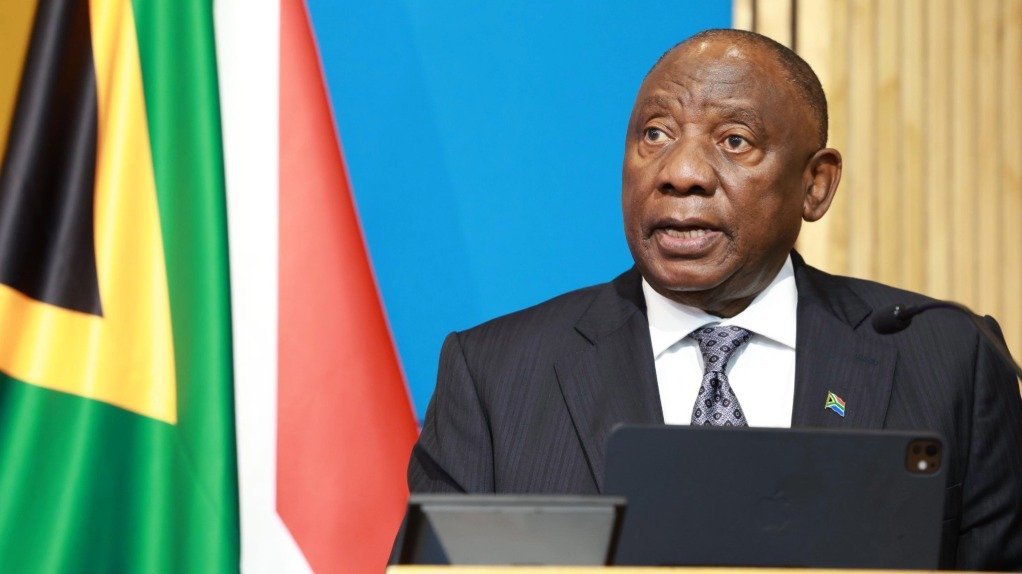
According to Reuters, ANC spokesperson Mahlengi Bhengu dismissed claims that Ramaphosa was facing pressure to step down, maintaining that the party’s leadership continued to support him. The statement followed criticism from former President Thabo Mbeki, who argued that Ramaphosa and other senior ANC officials should resign following the election defeat.
The dispute has placed the ANC Leadership Crisis at the centre of South Africa’s political debate, although the party has publicly denied that a leadership change is being demanded internally. With the ANC preparing to elect a new leader in December 2027, the immediate challenge is maintaining political unity while negotiating municipal governments after a significant loss of electoral support.
ANC Rejects Calls for Cyril Ramaphosa’s Resignation
The ANC’s National Executive Committee (NEC), its principal decision-making body between national conferences, convened on Thursday to examine the party’s election performance and its negotiating position.
Speaking before the meeting, Bhengu insisted that Ramaphosa retained the confidence of the leadership.
“The president is going nowhere,” she told reporters.
She also rejected a TimesLive report suggesting that Ramaphosa had contemplated resigning as ANC leader following the election results, describing the claim as a fabrication.
Her comments establish the party’s official position, but they do not eliminate the broader political debate surrounding Ramaphosa’s leadership.
The distinction is important. Public criticism of a president, even from influential former leaders, does not necessarily amount to a formal effort by a party’s governing structures to remove that president.
The ANC Leadership Crisis is therefore better understood as growing political pressure over the party’s electoral direction, accompanied by competing assessments of who should take responsibility for its decline.
Ramaphosa’s position also involves two separate offices: he is President of South Africa and president of the ANC. A change in the party leadership would not automatically constitute resignation from the national presidency.
The current dispute concerns his continued leadership of the ANC following the municipal election setback.
ANC’s Election Defeat Exposes a Wider Political Problem
The controversy follows an election in which the ANC received 30.76% of the national vote, according to the Electoral Commission of South Africa’s declared results.
The Democratic Alliance secured 24.64%, while former President Jacob Zuma’s uMkhonto weSizwe party received 9.76%.
The ANC’s result represents a fall of approximately 15 percentage points from its 2021 municipal election performance.
The decline is substantial for a party that dominated South African politics after the country’s transition to democracy in 1994.
However, the election did not eliminate the ANC’s political influence. The party remained the largest nationally by vote share and secured outright control in 53 municipalities, according to the electoral commission.
Its difficulty is concentrated in the loss of governing majorities and its reduced ability to determine political outcomes without negotiating with competitors.
The election also produced a more fragmented municipal landscape. The Democratic Alliance strengthened its position in important metropolitan areas, while other parties gained influence in municipalities where no single organisation secured a majority.
These results mean the ANC must now negotiate political partnerships in places where it previously enjoyed greater independence.
The challenge extends further than the identity of its leader.
The party must establish how it intends to respond to dissatisfaction over public services, municipal administration and governance while operating in a more competitive political environment.
Replacing a leader would not, by itself, resolve these institutional problems.
Thabo Mbeki’s Criticism Revives Debate Over Political Accountability
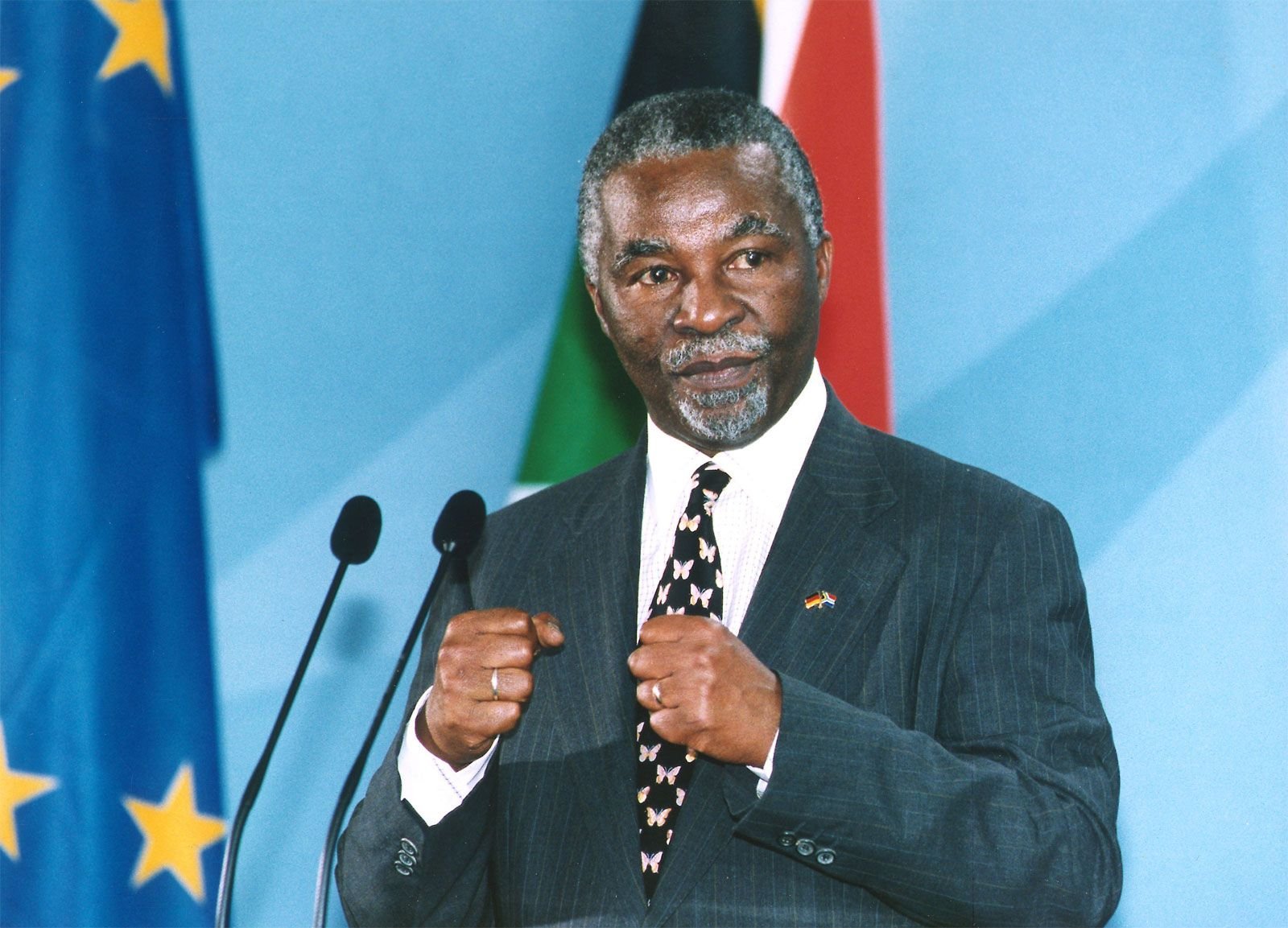
Former South African President Thabo Mbeki has emerged as a prominent critic of Ramaphosa following the municipal elections.
In a podcast interview reported by Reuters, Mbeki argued that Ramaphosa and other senior ANC leaders should resign over the party’s poor performance.
Mbeki’s intervention carries political significance because of his history within the ANC and his previous leadership of South Africa.
He served as the country’s president from 1999 to 2008, succeeding Nelson Mandela. Ramaphosa, who had been involved in the negotiations that helped end apartheid, was previously viewed as a possible successor to Mandela before Mbeki emerged as the preferred candidate.
Their political differences therefore have a history extending well before the latest municipal elections.
However, Mbeki’s criticism should not be interpreted as evidence that the ANC’s NEC has agreed to remove Ramaphosa.
The former president’s position raises a broader question about political accountability following electoral defeats.
In democratic party systems, leadership changes can be one response to declining public support. Other responses include organisational reform, changes to policy, restructuring local branches and improving government performance.
The effectiveness of any response depends on the problems that caused voters to withdraw their support.
For the ANC, the electoral figures suggest that its difficulties cannot be addressed solely through public assurances of leadership unity.
The party will also need to demonstrate that it understands the concerns influencing voter decisions.
Don’t Miss This:
South Africa ANC Election Defeat in 2026 Deepens Coalition Politics as DA Leads 5 of 8 Major Cities
Coalition Negotiations Become the ANC’s Immediate Test
While the leadership debate has attracted public attention, the NEC’s most immediate responsibility is establishing the ANC’s approach to municipal coalition agreements.
South Africa’s electoral commission declared a result in which many municipal councils require agreements between parties before stable administrations can be formed.
The ANC’s meeting is expected to provide a negotiating mandate for its representatives and examine discussions already initiated with other political organisations.
Coalition negotiations will influence the selection of municipal leaders, the distribution of political responsibilities and the ability of councils to approve budgets and deliver services.
The ANC faces a difficult balance.
It must seek agreements that allow it to participate in government while avoiding arrangements that could damage its credibility further.
For opposition parties, the negotiations create opportunities to exercise influence over municipalities where they have gained electoral support.
Smaller parties may also become important partners because their seats can determine the formation of governing majorities.
These negotiations matter to residents and businesses because municipalities oversee essential functions, including local infrastructure, water distribution, sanitation and waste collection.
An unstable coalition can complicate administrative decisions if political partners repeatedly disagree over leadership or municipal priorities.
A workable agreement, on the other hand, can provide a basis for consistent decision-making, provided participating parties maintain their commitments.
The ANC has said its response to the election must address the needs of South Africans and the stability of local government, not simply the allocation of political positions.
The credibility of that commitment will depend on the agreements eventually reached and the performance of the resulting administrations.
Cyril Ramaphosa’s 2027 Succession Raises the Stakes
The ANC Leadership Crisis comes at a sensitive point in the party’s leadership calendar.
Ramaphosa is expected to step aside as ANC president in December 2027 after completing two five-year terms.
The party therefore faces a scheduled leadership transition regardless of the present controversy.
Its municipal election performance could influence that process by shaping internal debates over political strategy, organisational reform and the qualities expected of its next leader.
Candidates seeking to succeed Ramaphosa may face pressure to explain how they intend to rebuild electoral support.
The party’s record in coalition negotiations could also become part of the debate.
Successful municipal agreements may strengthen arguments for cooperation with other parties, while unstable arrangements could intensify disagreement over the ANC’s political direction.
However, no successor has been established by the November 12 Reuters report, and the NEC meeting should not be presented as a leadership election.
The scheduled December 2027 transition remains separate from the immediate discussion about Ramaphosa’s position.
The broader electoral timetable adds urgency. South Africa’s next national elections are expected in 2029, leaving the ANC with a limited period to improve its standing among voters.
The party’s future competitiveness will depend on more than the outcome of its leadership contest. It will also be influenced by the performance of the governments in which it participates and its ability to restore confidence among communities dissatisfied with public services.
What This Means For Africa
The developments within the ANC provide an important example of how electoral competition can change the balance of power inside a long-established political party.
The ANC Leadership Crisis has emerged because the party’s historical dominance no longer guarantees the level of public support it previously enjoyed.
Its electoral decline also demonstrates that political legitimacy and electoral competitiveness are separate considerations. A party may retain an important historical identity while facing demands to demonstrate its present ability to govern.
For African political institutions, South Africa’s experience illustrates the importance of responding to electoral losses through both leadership accountability and improvements in public administration.
The dispute involving Ramaphosa and Mbeki is significant, but the more consequential test may be how the ANC manages coalition negotiations and responds to public dissatisfaction.
South Africa is one of the continent’s major economies, and the quality of governance in its principal cities matters for infrastructure, business activity, investment conditions and essential services.
Political stability at the municipal level can influence how effectively these responsibilities are carried out.
The growing importance of coalition politics also introduces a different model of political competition, in which parties must negotiate with rivals and accept limits on their individual authority.
This can create opportunities for broader representation, but it also requires agreements capable of surviving political disagreements.
For the ANC, retaining Ramaphosa’s leadership does not remove the need for organisational reform. Equally, changing leaders would not guarantee a recovery in public confidence.
The party’s response will be judged through its ability to establish functioning municipal administrations, improve services and present a credible political direction before the 2029 elections.
The November 12 NEC meeting therefore represents more than an internal defence of the president. It marks an early stage in determining how South Africa’s former dominant party intends to operate in a political system where electoral victories can no longer be assumed.
Don’t Miss This:
South African Rand Falls 0.3% to 16.5275 Against Dollar as ANC Vote Share Drops to 32%
Image Credit: Polity & Britannica