



Liya Kebede is not just a face that has graced the world’s most prestigious covers. She is a woman who took the world’s attention and quietly, powerfully, redirected it toward the people who needed it most.
Born on March 1, 1978, in Addis Ababa, Ethiopia, Liya grew up as the only daughter among four brothers, perhaps an early sign that she was built to stand out. Her journey began unexpectedly when a film director noticed her at the Lycée Guébré-Mariam, the French international school where she was a student.
That encounter opened a door she walked through with quiet confidence, first to Paris, then to Chicago, and eventually to New York City, where the world would come to know her name.

Her breakthrough arrived when the legendary Tom Ford personally selected her for an exclusive Gucci Fall/Winter 2000 show. From that moment, there was no looking back. She went on to grace the cover of Vogue at least 20 times, across its American, French, Italian, Spanish, Japanese, German, Portuguese, Russian, Greek, and Korean editions.
In 2002, Paris Vogue dedicated an entire issue to her, a rare and remarkable honour. Her face became the face of campaigns for Louis Vuitton, Dolce & Gabbana, Tommy Hilfiger, Victoria’s Secret, Revlon, Yves Saint-Laurent, and many more of the world’s most iconic brands.
In 2003, she became the face of Estée Lauder, the first and only Ethiopian ever to represent the brand in its history. At that point, she held the number one spot on models.com, and by 2007, Forbes ranked her eleventh among the world’s top-earning supermodels.
But Liya was never just a model. She was always more.
In 2005, she was appointed WHO Goodwill Ambassador for Maternal, Newborn and Child Health, a role that would define the deeper dimension of her legacy. She founded the Liya Kebede Foundation, dedicated to reducing maternal, newborn, and child mortality in Ethiopia and across the world.
Through funding advocacy, community-based education, and direct medical support, the Foundation has made measurable impact, in one health centre it supported, hospital deliveries rose by over 50% within just 12 months.
She has also collaborated with the Bill & Melinda Gates Foundation and served as a High-Level Adviser for the Center for Global Development’s landmark report, “Start with a Girl: A New Agenda for Global Health.”
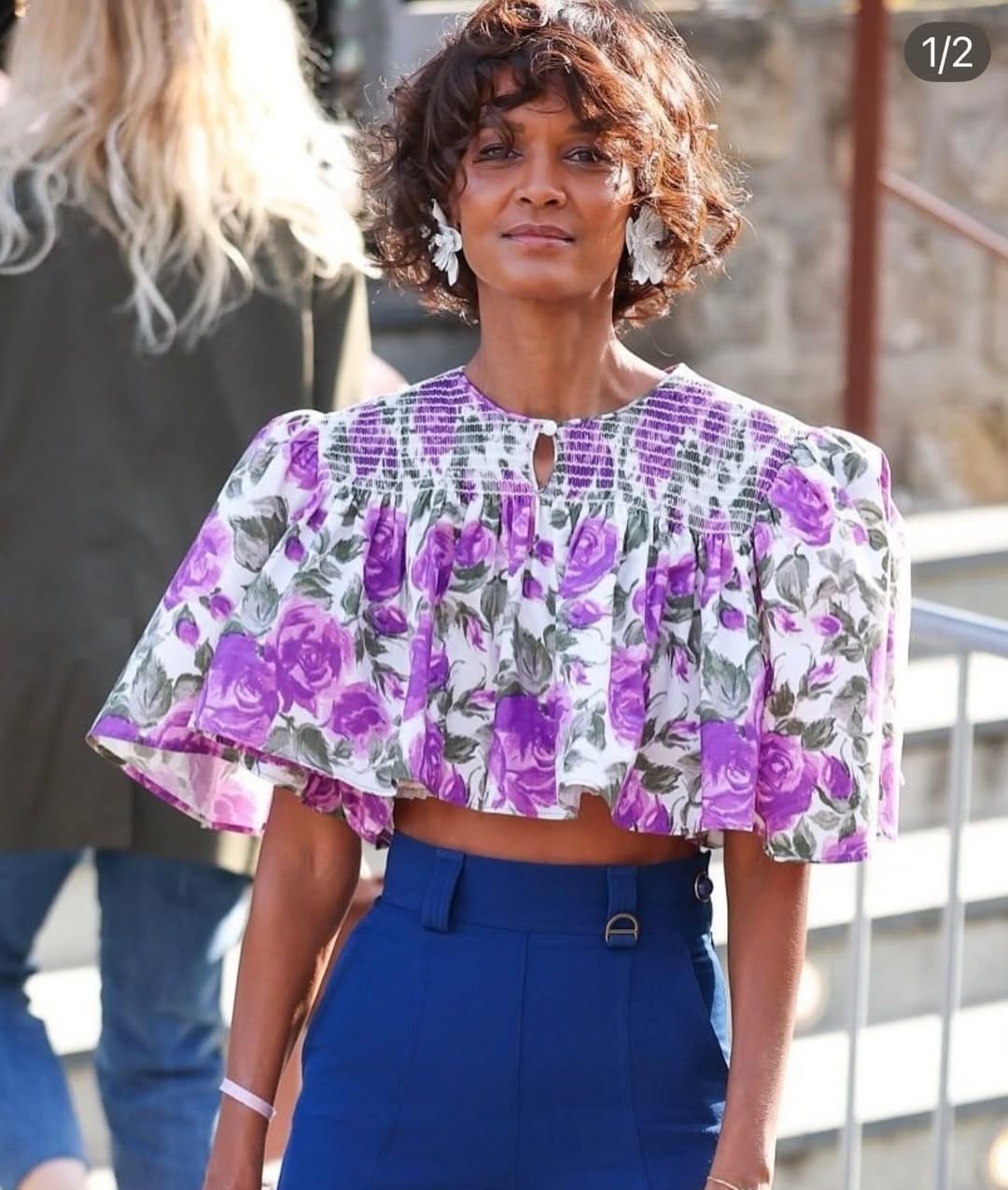
In 2007, Liya launched Lemlem, a clothing brand whose name means “to bloom” in Amharic. More than a fashion line, Lemlem was born as a mission: to preserve Ethiopia’s rich tradition of hand-spun, woven, and embroidered artistry, while creating sustainable livelihoods for local artisans. Today, Lemlem is carried by over 150 retailers worldwide, weaving African heritage into the global fashion conversation.
On screen, Liya has demonstrated yet another dimension of her talent. She starred in the 2009 film Desert Flower, a powerful adaptation of Waris Dirie’s autobiography — which premiered at the Venice Film Festival to a standing ovation. She has also appeared in Lord of War (2005) and The Good Shepherd (2006), among other international productions.
In 2013, Glamour magazine named her one of its Women of the Year, recognising her philanthropic work alongside her enduring cultural influence.
What makes Liya extraordinary is the seamlessness with which she moves between worlds, from the runway to the village health centre, from the film set to the advocacy stage, without ever losing the thread of who she is and where she comes from. She has used every platform the world gave her to amplify voices that rarely get a platform at all.
Liya Kebede is proof that grace and grit are not opposites. That beauty can carry purpose. That a girl from Addis Ababa can stand at the centre of the world, and still choose to look back, reach back, and bring others forward.


