



South Africa faces potential job losses in its agricultural and export industries after the United States announced that the country would lose duty-free trade benefits under the African Growth and Opportunity Act (AGOA) from January 2027. The decision, which also affects Rwanda, has raised concerns among exporters over higher tariffs, reduced profit margins and the future of businesses that depend on the American market.
According to Reuters, the South Africa AGOA Suspension was announced by Washington on Monday, November 2, 2026, with both South Africa and Rwanda declared ineligible for the programme because of practices the US government said threatened American interests.
Although the decision has prompted concerns about South Africa Export Job Losses, economists and industry representatives expect its overall economic impact to be limited. Almost 90% of South Africa’s exports to the United States already fall outside AGOA, while some products that previously benefited from the programme have been affected by separate American tariffs.
South Africa has been the largest beneficiary of AGOA, using the programme for approximately two decades to export products including automotive components, citrus fruit and wine to the United States. The withdrawal of preferential access is expected to affect businesses differently, depending on their products, existing tariff arrangements and dependence on American customers.
South Africa AGOA Suspension to Take Effect in January 2027
The United States announced that South Africa and Rwanda would lose eligibility for AGOA benefits beginning in January 2027.
The South Africa AGOA Suspension means qualifying exports from the country will no longer receive the duty-free treatment previously available under the programme.
AGOA provides eligible sub-Saharan African countries with preferential access to the American market for qualifying products. Its purpose is to support trade and economic activity through reduced barriers to US imports.
For South African exporters, losing these benefits will increase the cost of sending certain products to American buyers.
However, the suspension does not amount to a complete prohibition on South African goods entering the United States.
Agricultural economist Wandile Sihlobo explained that exclusion from AGOA means affected exports will face additional tariffs, not that the American market will become inaccessible.
He estimated that the additional tariff would be approximately 3.4% for most products.
The precise effect will vary across industries because tariff treatment depends on the product and other applicable trade measures.
The decision therefore creates a new cost for affected exporters without automatically ending commercial relations between South African businesses and their American customers.
South Africa Export Job Losses Expected in Agriculture and Manufacturing
Concerns about employment have become a major issue following Washington’s announcement.
The potential for South Africa Export Job Losses is particularly significant because the country already faces a high unemployment rate.
Export-dependent businesses may have to absorb additional tariffs, negotiate prices with American buyers or reconsider production and investment plans.
These adjustments could affect workers in industries where access to the US market has supported employment.
Business Unity South Africa, a major business organisation, estimated that job losses could be in the range of a few thousand.
The estimate does not represent confirmed layoffs, and the number of workers ultimately affected will depend on how individual industries respond to the new trading conditions.
The Congress of South African Trade Unions (COSATU), the country’s largest trade union federation, expressed concern about the consequences for workers and communities.
The union warned that South Africa could not afford to lose employment opportunities in an economy already facing substantial labour market difficulties.
Its response reflects concerns that even a relatively limited national economic impact could have serious consequences for workers employed by individual exporters.
While economists expect the wider economic effects to remain contained, that assessment does not eliminate the possibility of significant losses in particular businesses or communities.
Citrus Growers Warn That US Market Cannot Be Easily Replaced
South Africa’s citrus industry is among the sectors concerned about the withdrawal of preferential trade access.
Gerrit van der Merwe, chairman of the Citrus Growers’ Association of Southern Africa, said some orchards had been established specifically to supply American customers.
These investments reflect the importance of the US market to producers who have developed their operations around its commercial and regulatory requirements.
Van der Merwe explained that fruit intended for American buyers cannot always be redirected easily to other countries because markets have different plant health requirements and consumer preferences.
This creates a challenge for producers seeking alternative destinations for their exports.
Finding new customers may require adjustments to production, compliance procedures, marketing arrangements and distribution channels.
The potential for South Africa Export Job Losses is therefore a concern for citrus businesses whose sales depend heavily on the United States.
Van der Merwe acknowledged that some workers would lose their jobs following the withdrawal of benefits, although he said it was too early to determine the number.
The warning highlights the difference between the national economic impact of the suspension and the consequences for individual export industries.
A relatively small change in overall trade figures can still create substantial difficulties for businesses with limited opportunities to redirect their products.
Don’t Miss This:
South Africa AGOA Suspension Adds Tariffs to Selected Exports
The South Africa AGOA Suspension will change the tariff treatment of qualifying products that previously entered the American market duty-free.
Agricultural economist Wandile Sihlobo said most affected products would face an additional tariff of approximately 3.4%.
He also explained that discussions about South Africa’s continued participation in AGOA had been taking place for over a decade.
One issue raised in those discussions was South Africa’s status as an upper-middle-income economy and the possibility of moving towards a more reciprocal trade arrangement with the United States.
This provides a broader economic context for the debate over preferential market access.
However, the Reuters report identifies Washington’s stated justification for the latest suspension as practices it considers threatening to American interests.
The distinction matters because previous debates about eligibility do not necessarily establish the reason for the current American decision.
Sihlobo also pointed out that almost 90% of South Africa’s exports to the United States already fall outside AGOA.
This suggests that the direct withdrawal of AGOA preferences affects a smaller share of total exports than might be assumed from the programme’s importance to certain industries.
Nevertheless, the impact will not be distributed evenly.
Businesses that have relied on duty-free treatment may experience greater pressure than exporters whose products were already subject to ordinary tariff arrangements.
South African Automotive Exports Already Face US Tariffs
South Africa’s automotive industry is another sector exposed to changes in American trade policy.
According to the National Association of Automobile Manufacturers of South Africa, known as naamsa, the United States, Mexico and Canada collectively accounted for approximately 8% of South Africa’s automotive exports in 2025.
The United States represented the largest share within that North American market.
However, South African automotive exports to the US had already been affected by additional American tariffs introduced in 2025.
Reuters reported that those measures had effectively cancelled the AGOA advantages previously available to the sector.
This means the latest eligibility decision does not necessarily create the same additional impact for automotive exporters as it does for agricultural producers still benefiting from preferential access.
The effect on individual manufacturers will depend on their existing tariff exposure and commercial arrangements.
The possibility of South Africa Export Job Losses remains relevant to the manufacturing sector, but the Reuters report does not provide a confirmed number of automotive jobs expected to disappear because of the November announcement.
The industry’s experience also demonstrates that AGOA eligibility is only one part of the broader trade relationship between South Africa and the United States.
Separate tariffs can affect export competitiveness even when preferential trade programmes remain in place.
South Africa AGOA Suspension Adds Pressure to US Trade Relations
The decision comes amid disagreements between Pretoria and Washington over political issues and the treatment of South Africa’s white population.
US President Donald Trump has accused South Africa of persecuting white people, an allegation rejected by the South African government.
Pretoria has described the claims as a false narrative promoted by fringe groups.
COSATU also criticised groups it accused of lobbying American authorities with misleading claims about conditions in South Africa.
The union argued that these activities had damaged bilateral relations and contributed to consequences for South African workers and businesses.
These remain attributed allegations and political positions, not independently established explanations for every element of Washington’s trade decision.
The US government stated that South Africa and Rwanda were being declared ineligible because of practices that threatened American interests.
The South Africa AGOA Suspension therefore forms part of a wider disagreement over trade eligibility and bilateral relations.
However, the Reuters report does not provide a detailed list of the specific practices Washington relied upon when making its determination.
The economic consequences of the decision can be assessed separately from the competing political explanations surrounding it.
For exporters, the immediate concern is how the change in tariff treatment will affect prices, contracts and future sales.
South African Government Working With Affected Industries
South Africa’s government has said it is working with industries affected by the withdrawal of AGOA benefits.
The trade ministry confirmed that it was assessing the implications and considering support for businesses exposed to the change.
The ministry also said it was accelerating efforts to diversify South Africa’s export markets.
The response comes under the administration of President Cyril Ramaphosa, whose government is responsible for managing the country’s trade relations and broader economic policy.
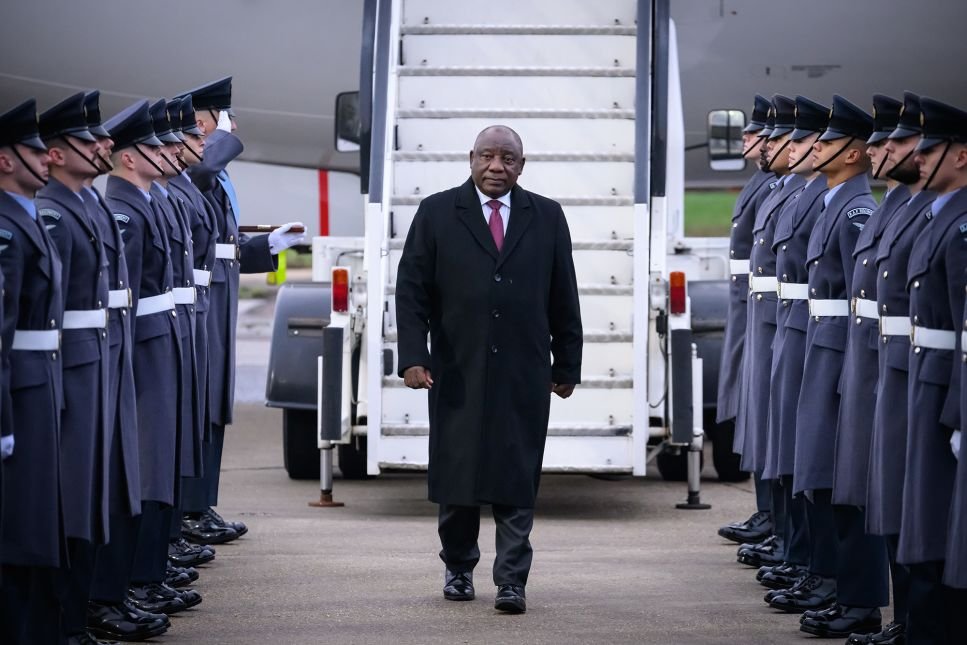
The ministry’s spokesperson said on X that the decision was far from a disaster, pointing to the relatively limited proportion of exports directly covered by AGOA.
The government’s assessment is consistent with the view that most South African exports to the United States already operate outside the programme.
However, officials have acknowledged the need to engage industries that may experience difficulties following the loss of preferential treatment.
The government has not, in the supplied Reuters report, announced a specific financial assistance amount or a detailed compensation programme for affected businesses.
Its confirmed response consists of industry engagement, impact assessment, support planning and export market diversification.
These measures may become particularly important for agricultural exporters that cannot easily redirect products developed for American buyers.
The effectiveness of any support will depend on the measures eventually introduced and the circumstances facing individual industries.
Rwanda Also Faces Loss of AGOA Trade Benefits
Rwanda is the second African country named in Washington’s November 2 announcement.
Like South Africa, Rwanda is scheduled to lose eligibility for duty-free benefits under AGOA from January 2027.
However, Rwanda’s trade relationship with the United States is considerably smaller than South Africa’s.
According to Rwanda’s National Institute of Statistics, the United States was the country’s tenth-largest trading partner in 2024.
This difference in trade volumes means the two countries may face different economic consequences from the withdrawal of preferential access.
The Reuters report does not provide an estimate of potential job losses in Rwanda or identify the sectors most exposed to the decision.
Rwandan government officials had not responded to requests for comment at the time of publication.
It would therefore be premature to conclude that Rwanda will experience the same employment or export effects as South Africa.
The two countries share the same announced change in AGOA eligibility, but their trade structures and levels of exposure to the American market differ.
The suspension also raises questions about how affected exporters in both countries will adapt to the new tariff conditions.
What This Means For Africa
The decision to suspend South Africa and Rwanda from AGOA highlights the importance of preferential trade arrangements for African exporters seeking access to major international markets.
For South Africa, the South Africa AGOA Suspension is expected to have a limited effect on the overall economy because almost 90% of exports to the United States already fall outside the programme.
However, this does not mean the consequences will be insignificant for businesses that depend on duty-free access.
Citrus growers have warned that products developed for the American market cannot easily be redirected elsewhere, while business representatives have estimated that employment losses could reach a few thousand.
The possibility of South Africa Export Job Losses is especially important in a country where unemployment is already a major economic concern.
For other African economies, the development demonstrates how changes in trade preferences can affect businesses that have made long-term investments based on access to foreign markets.
It also shows why the effects of international trade decisions must be examined at both national and industry levels.
A policy change may have a limited effect on total exports while creating serious difficulties for specific producers and their employees.
The South African government’s plans to work with affected industries and accelerate export diversification reflect the need to respond to these differences.
Rwanda’s inclusion in the suspension also demonstrates that changes to AGOA eligibility can affect countries with different economic structures and levels of trade with the United States.
As of November 3, 2026, the suspension was scheduled to take effect in January 2027, while estimates of job losses remained preliminary.
The immediate priority for affected businesses is understanding the new tariff costs and determining how they may influence future export operations.
Across Africa, the development reinforces the economic importance of maintaining competitive export industries while reducing excessive dependence on any single preferential trade arrangement.
Don’t Miss This:
Image Credit: Cable News Network